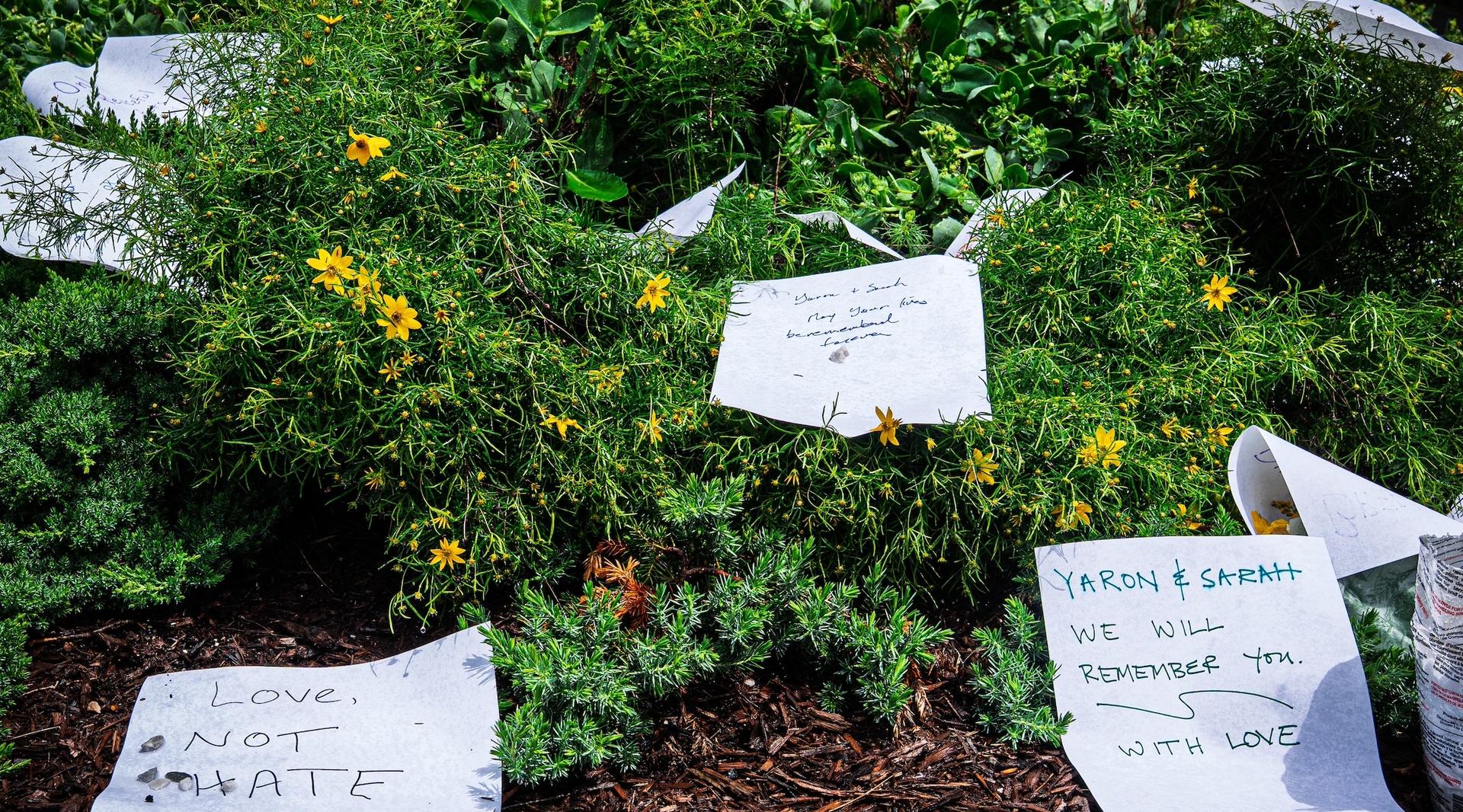
Where do the cold-blooded murders of two Israeli Embassy staffers, Sarah Milgrim and Yaron Lischinsky, outside of Washington’s Capital Jewish Museum, belong in the long and tragic litany of attacks at Jewish institutions?
Was it another “Pittsburgh,” when a radicalized white supremacist murdered 11 people at a synagogue on a Shabbat morning?
Or was it a political killing, a spillover from the war in Gaza, which has inspired violent attacks not only on Jews but on Palestinian Americans and the three Palestinian students who were shot in Vermont in November 2023?
The gap between the two framings is wide and telling. For many Jews, the D.C. murders were antisemitism, plain and simple. Others want to cast the attacks as the tragic but inevitable globalization of the conflict in which Israeli and Palestinans have died over the sins of their leaders.
The stakes in such comparisons and distinctions are more than semantic. Pro-Palestinian activists accuse Israel's supporters of invoking antisemitism to quash support for Palestinians and criticism of Israel.
Many Jewish leaders, meanwhile, say that the often violent rhetoric of the pro-Palestinian movement has endangered Jews no matter where they live, or where they stand on Israel. “For a year and a half, some within the pro-Palestine movement have signaled that the way to put political pressure on Israel is not merely to protest in front of Israeli Consulates and Embassies,” wrote Naftali Shavelson, the former media director at the Consulate General of Israel in New York. “Rather, it is to intimidate Jewish families going to Sabbath prayers and Jewish students going to get-togethers on campus.”